Report: Adolescent flourishing in schools


A new research report shares findings from one of the largest studies of adolescent flourishing in schools ever undertaken, as part of the Human Flourishing Program's Flourishing Schools Project.
The Student Flourishing in Australian Christian Schools research project surveyed 22,092 students in Years 7 to 12 across 57 Christian schools in Australia, with 17,295 students participating in the second wave of data collection.
The study explored how adolescents are flourishing and which school-based practices are associated with higher student flourishing over time. The survey used the Human Flourishing Program’s Adolescent Flourishing Measure, which includes domains such as happiness and life satisfaction, mental and physical health, meaning and purpose, character and virtue, social relationships, and safety and security.
Several findings stand out: Students who reported feeling loved “very much” by parents or guardians had substantially higher flourishing scores than students who reported feeling loved “very little.” The report also found that flourishing scores were lower among students who reported higher levels of smartphone use, while students who reported more sleep and more physical activity had higher flourishing scores.
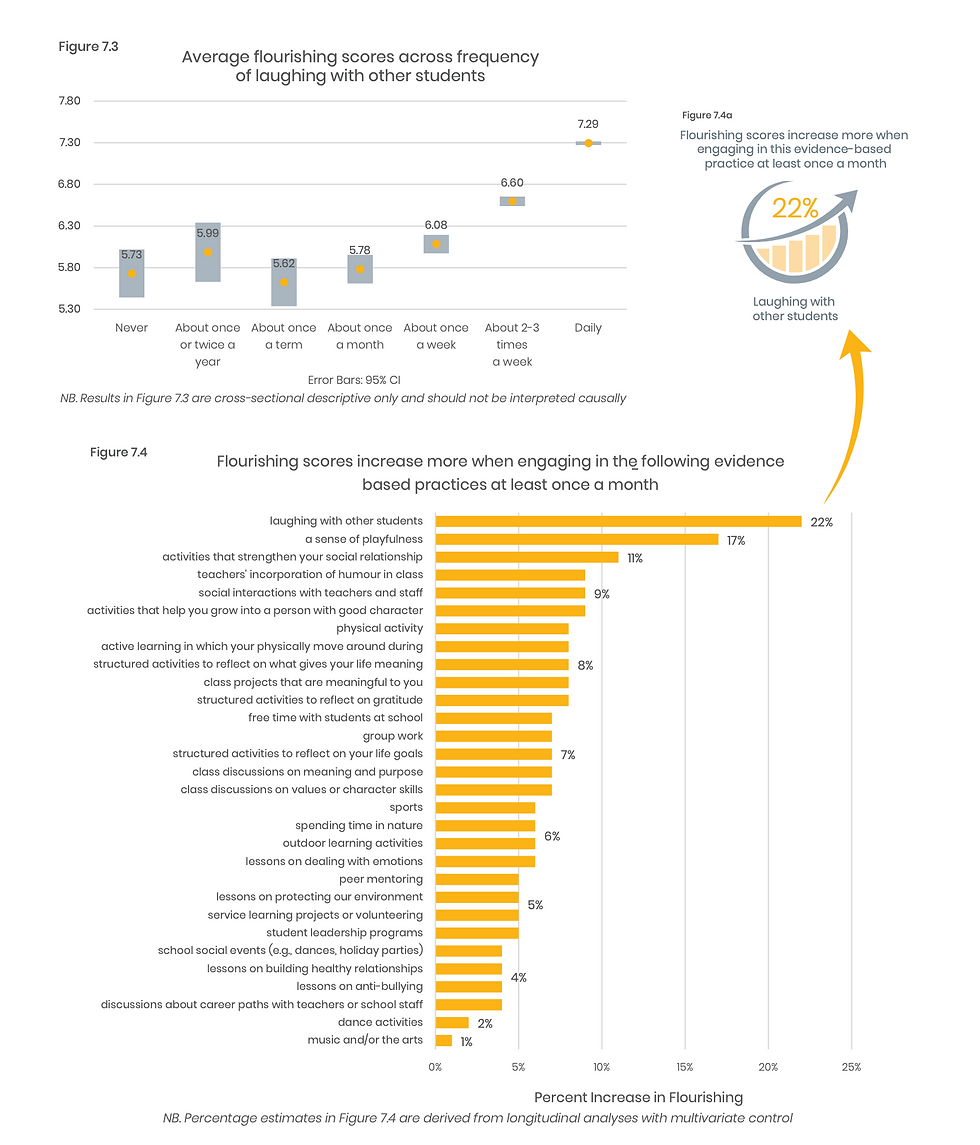
Relationships emerged as a central theme. Longitudinal analyses found that student flourishing scores increased most when students laughed with peers at least once a month, with a 22% increase observed from Wave 1 to Wave 2. Other practices associated with increases in flourishing included a sense of playfulness, activities that strengthen social relationships, teachers’ use of humor in class, and social interactions with teachers and staff.
The report also highlights the importance of learning engagement, spiritual formation, service-learning, volunteering, and civic and social engagement in student flourishing. Across the findings, the report points to the importance of schools as relational and formative communities, not only places of academic instruction.
Dr. Christina Hinton of Research Schools International and the Human Flourishing Program, along with Dr. Brendan Case of the Human Flourishing Program, also presented key findings from the report in a video conversation. The presentation offers a concise overview of the study’s design, major findings, and implications for school leaders, educators, and families.


