Human Flourishing: What It Is and How to Do It (Mayo Clinic Podcast)
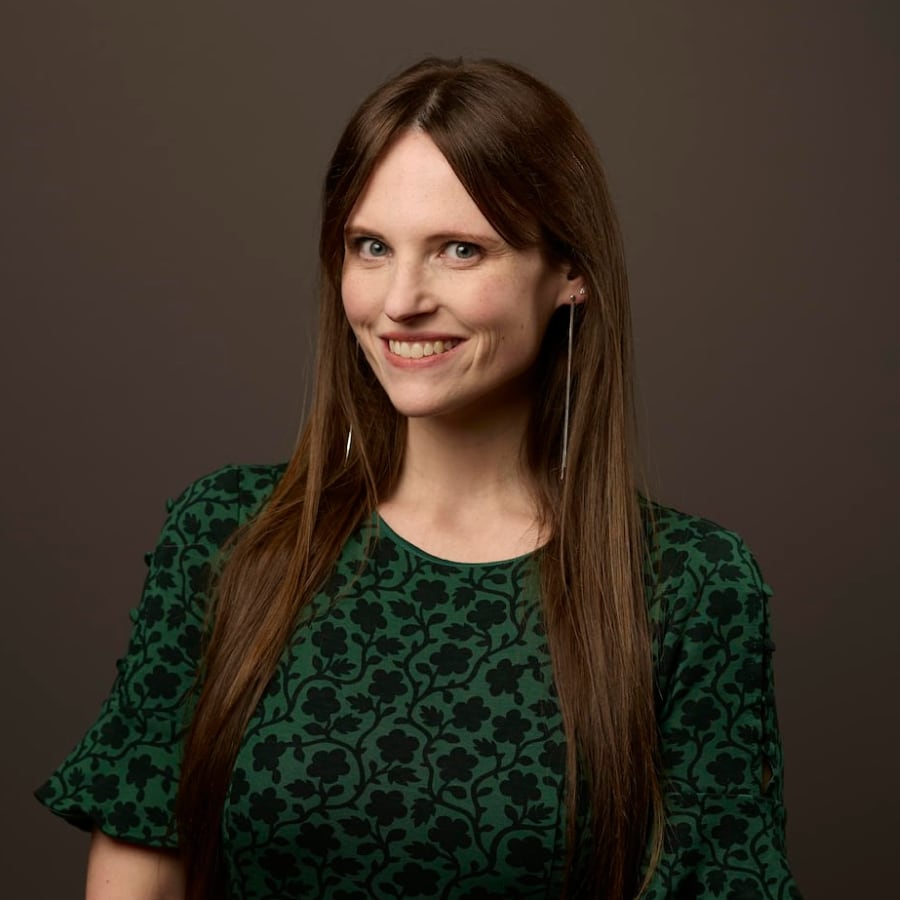

Dr. Renae Wilkinson recently joined Mayo Clinic’s On Human Optimization podcast to discuss what human flourishing is and how we can move beyond measures like money, degrees, and awards to take a fuller view of how life is going. In the conversation, Renae explores why people can look successful on paper yet feel lonely, purposeless, or depleted, and what steps can help us flourish across the major areas of life.
Listen to “Human Flourishing: What It Is and How to Do It”: https://ce.mayo.edu/content/mayo-clinic-human-optimization
Transcript
Christopher L. Camp, M.D. 2:02
Well, Renee, thank you so much for joining us here on Mayo Clinic on human Optimization.
Dr. Renae Wilkinson 2:06
Thank you so much, Christopher. It's a pleasure to be here.
Christopher L. Camp, M.D. 2:08
Well, I'm excited to talk about this. As an expert in the field, how would you define human flourishing in a clear and practical way for our audience?
Dr. Renae Wilkinson 2:16
I'll begin by describing the Human Flourishing program where where I am. It's an interdisciplinary Research Center at Harvard University. We aim to study and promote human flourishing. So we have our own conception of human flourishing, which is a state in which all aspects of a person's life are good, including the context in which that person lives.
Dr. Renae Wilkinson 2:35
So with this definition in mind, there are, you know, three key features that I would that I would highlight. First of all, it's an ideal. It's never perfectly attained. We are always flourishing only in a relative sense. And then a really important aspect is that it's multi dimensional.
Dr. Renae Wilkinson 2:53
So it can be that some aspects of your life are going well while others are not. It's not a binary 1 is not either flourishing or not flourishing. And then, as with the definition, the context in which a person lives, It's communal. So it includes communities and environments in which someone lives.
Dr. Renae Wilkinson 3:11
So when we speak about individual flourishing, we usually talk about well-being so at the individual level when not taking into account the context. But true flourishing must include the context in which we live.
Christopher L. Camp, M.D. 3:23
That's a very rich definition. I really like the fact you talk about it as being an ideal and to me that highlights that this, along with so many other things that we do, are a journey and not a destination. So what exactly are sort of the key components or these different dimensions that people need to be thinking about that determine their flourishing?
Dr. Renae Wilkinson 3:46
Within the Human Flourishing program, we really focus on five key domains and those are happiness and life satisfaction, just kind of our effective experience and our overall evaluation of life. How well we think our life is going. Physical and mental health, which is our our embodied and emotional nature, our meaning and purpose in life.
Dr. Renae Wilkinson 4:05
So our sense that our life is worthwhile, character and virtue which is our volitional nature and acting to promote good within difficult circumstances and then our close social relationships, feeling content and satisfied with our friendships and relationships.
Dr. Renae Wilkinson 4:22
So those are the five key domains that we would say constitute flourishing. But there is 1/6 domain financial and material stability, which is a key means to the other 5 ends. There are a lot of other factors that could be considered to be aspects of flourishing, but we focus on these five domains because they're important to most people across most cultures.
Dr. Renae Wilkinson 4:43
We would say that they're almost universally desired, and each of these constitutes its own end. It is desired for its own sake, not only as a means to another goal or end. And so the reason why we include this 6th domain is it's helpful for sustaining flourishing or it's a means to sustain the other domains as ends.
Christopher L. Camp, M.D. 5:05
OK, so we have these five primary domains to focus on, the 6th 1, which is also important to consider. As I look at these, I think these are fairly, you know, broad terms and concepts that really apply to all of us regardless of what our life situation, circumstance, profession, vocation, family, all that sort of stuff, regardless of what those things are.
Christopher L. Camp, M.D. 5:27
So I imagine this could look different for people depending on what their situation is. So I'm curious, what does the road to flourishing look like? Are there clear areas or pathways that people should be focusing on and thinking about saying these are the areas of my life that I need to line up so I can achieve the state of flourishing?
Dr. Renae Wilkinson 5:50
Absolutely. How do we get there? How do we get to these ends, these desired ends in their for their own sake? Within the Human Flourishing program, we focus on 4 institutional pathways and those are family and friendship, education, work and religious communities.
Dr. Renae Wilkinson 6:09
These are the factors that we know contribute to flourishing. So there's strong research base that we continue to develop with the Human Flourishing program that supports each of these as important predictors of many health and well beings across the life course, across life stages.
Christopher L. Camp, M.D. 6:23
OK, so I like having these four areas for us to focus on in our lives, but I would imagine even within those areas, that doesn't mean that your four areas need to look the same as my, is that correct? So let's go through each of those a little bit. So family and friends, I think most people kind of understand we all have different families, different friends situations, we we get that.
Christopher L. Camp, M.D. 6:41
But the more meaningful relationships and connections you have, you know, probably the better the education piece. Explain that to me a little bit. What what exactly are we talking about? You know higher level degrees that we need to be seeking or or is it broader than that?
Dr. Renae Wilkinson 6:57
Within the literature there's, you know, a little bit of debate about credentialism. So is it the credential that matters for better health and well-being across the life course or is it number of years of education? I think it, it comes back to this, you know, this mindset shift that education expands one's horizons.
Dr. Renae Wilkinson 7:13
People who earn more education are more aware of healthy behaviors like, you know, exercise or eating well. And so on average, people who attain higher education tend to live longer. They have more longevity. And so that's why education, you know, as as we conceptualize it as a pathway, yes, it would on average tend to be, you know, more education going further in school compared to having, you know, not not having a high school degree.
Dr. Renae Wilkinson 7:41
But, you know, I think it is more broadly considered taking advantage of of opportunities to learn more and to be a lifelong learner.
Christopher L. Camp, M.D. 7:51
That makes perfect sense to me. And then the third element you you mentioned there was work in in that is it more about are there certain types of jobs that will help people flourish or is it more that person's relationship with their work that helps them flourish?
Dr. Renae Wilkinson 8:07
That's a fantastic question. So in general, it is just having, having, having work, having employment. So we know on average, people who are employed tend to have, you know, better health and well-being across the life course than those who aren't. But the meaningful aspect of the work is very, very important.
Dr. Renae Wilkinson 8:22
Important. So feeling like the work that one does is satisfying and fulfilling and and contributing to more beyond your individual needs. So having a sense of, you know, purpose and and meaning within work. Yes, those are those are the ideals. Those are more beneficial for ones flourishing than, you know, non meaningful work.
Dr. Renae Wilkinson 8:41
But I I wouldn't say that it's the type of profession, because people derive meaning from different types of work in different ways.
Christopher L. Camp, M.D. 8:48
Well, thanks for clarifying that too. So, so our audience, this means we're not asking everybody to go out and change their job in order to in order to flourish. So that that's not the color. Yeah. So in your opinion, what are some common things that are not major contributors to human flourishing that might surprise people?
Dr. Renae Wilkinson 9:05
So we have that 6th domain of, you know, financial material stability that is important to to sustain the other domains that are ends in and of themselves. But as on its own, I would say that, you know, more broadly, the pursuit of of status and money in general is not a strong contributor to flourishing.
Dr. Renae Wilkinson 9:25
And I'll take this in a slightly different, different direction and say that at the societal level, our research is finding that, you know, economic development and societal level flourishing don't necessarily unfold in parallel. So one of the things at the at the society level, we assess well-being for different countries and cultures as gross domestic product, right?
Dr. Renae Wilkinson 9:48
So it there is an assumption that once a society is wealthier, is more developed, then you know, well-being follows, everyone is doing better. But part of the work of the Human Flourishing Program is this incredible longitudinal study that we have.
Dr. Renae Wilkinson 10:03
It's the global flourishing study and longitudinal study of over 200,000 individuals across 23 countries and territories around the world. And so it's longitudinal meaning that we're following the same individuals over time, over 4 years. And this gives us the opportunity to examine their flourishing over time as well as those pathways that contribute to their flourishing.
Dr. Renae Wilkinson 10:25
And what we're seeing and across these 23 countries is that while overall life evaluation, which is, you know, one of the the indicators of well-being and financial and material security tend to be higher in high income countries. Other aspects of well-being like sense of purpose and pro social behavior connected relationships are often higher in middle income countries.
Dr. Renae Wilkinson 10:49
This was one of the surprising takeaways from from the 1st and 2nd waves of the the global flourishing study, meaning that the most economically developed countries are not necessarily those that have the highest flourishing as we would conceptualize it at the human flourishing program as multidimensional.
Dr. Renae Wilkinson 11:04
So this kind of suggests that when we're considering, you know, societal level well-being, more economic development could potentially come at the cost of important aspects that make life worthwhile. So we would argue that sustainable economic development should consider more than GDP, gross domestic product, and life satisfaction.
Dr. Renae Wilkinson 11:28
Because if that's all that we're measuring, that's all we're going to aim for, that's all we're optimizing for, right? So we need a broader sense of measurement flourishing as multidimensional in our decision making and to think about how we measure this to influence policy.
Christopher L. Camp, M.D. 11:43
And and so Speaking of societal level flourishing, are you saying this is not something that's relevant just for individuals? Exactly. We talk about an individual level, we talk about a societal level. What about all of the different size groups in between? So maybe not just individuals, but does this also apply to families, schools, teams, you know, workplaces?
Dr. Renae Wilkinson 12:02
Absolutely. And our conception of flourishing explicitly includes the context in which a person lives, meaning that, you know, 1 is not fully flourishing if their community and their environment aren't good. And we have a community level well-being measure that focuses on different domains at the community level, which is different than the individual.
Dr. Renae Wilkinson 12:21
So how are relationships within the community? And how much does 1 support their their leadership and believe that their, the leadership in their community is something that they believe is good for their community. And this can be applied to families and schools and workplaces, other contexts and the community well-being measure.
Dr. Renae Wilkinson 12:42
The director of our program, Tyler Vanderweel proposed a 24 item community flourishing measure. We are going to be assessing this within the the community or the context of the United States nationally starting this fall with a state of the nation flourishing report.
Dr. Renae Wilkinson 12:58
We're going to be fielding this across the United States annually so that we can, you know, measure where, where we need to improve to see how our, our community, our context within the United States is doing. So a little known fact about my background before I earned my PHDI earned an MBA and maybe the the single thing that stuck with me the most is a a maxim from Peter Drucker that what gets measured gets managed.
Dr. Renae Wilkinson 13:28
And so, you know, the the emphasis at the Human flourishing program around measuring flourishing. It's taking stock of 1's own flourishing and the flourishing of the community in which one resides. This determines how we can improve. So we have to track it to know what what our goals are.
Dr. Renae Wilkinson 13:43
And so with the state of the nation flourishing report, this is centered on tracking trends in the in community well-being over time, as well as other aspects that are we would argue are important to flourishing like love of neighbor and love of enemy. In our, you know, politically divisive context currently, we would want to see how these things are trending over time so that we can promote better outcomes for individuals and for our nation.
Christopher L. Camp, M.D. 14:08
I'd like to point out like this is what science is. So this tells us that this applies not just to us as individuals, but really us in relation to every other group that we're a part of, large and small. That number two, it can be measured and then #3 I think that means that it can be managed or improved.
Christopher L. Camp, M.D. 14:26
And so we're going to have you tell us how to do that in our, in our third section, which I'm really looking forward to. There's a few other things I want to ask you about and to see how they may be different or related to the concept of flourishing. Things that I think are good but are worth clarifying.
Christopher L. Camp, M.D. 14:42
So I'm going to run through a few of them here if you don't mind. So tell me, how is flourishing different from first of all, being in a good mood?
Dr. Renae Wilkinson 14:50
So with each each of these, we're going to step back. One thing, you know, flourishing is multi dimensional. So it requires all aspects of our life to be good, not just the feeling in the moment. And so being in a good mood, you know, is, is changeable. It's, it's one aspect. There may be other aspects that are going well or not going very well.
Dr. Renae Wilkinson 15:07
So thinking about it, you know, multi dimensionally. My colleagues did some work on tracking levels of flourishing over the COVID-19 pandemic. And what we saw broadly was that happiness, health and financial stability dropped dramatically over the this time, but other aspects of flourishing, meaning character relationships tended to remain more stable.
Dr. Renae Wilkinson 15:29
So this indicates that these are distinct and and independent dimensions, right? So it's not just feeling good in the moment. There are other factors to consider.
Christopher L. Camp, M.D. 15:37
And then how is flourishing different from feeling comfortable in your life?
Dr. Renae Wilkinson 15:42
I would say that there are many who feel comfortable at which we usually take when we're, when we're talking about being comfortable, that could be, you know, economically stable or having a lack of like emotional or psychological distress or strain. There are people who feel comfortable in those ways but are deeply unhappy and feeling unfulfilled.
Dr. Renae Wilkinson 16:01
And this is a great example for suffering. So 1 can be voluntarily suffering to, to help others or in the pursuit of, of goals like marathon training, right? That that encompasses a, a fair amount of, of suffering other feats of physical endurance.
Dr. Renae Wilkinson 16:19
So one is not necessarily comfortable in those situations, right? But they may be flourishing because they have a great sense of, of purpose or meaning or they're connecting with others. So feeling comfortable in the moment is not not broad.
Christopher L. Camp, M.D. 16:32
Enough so you you're saying that you can be uncomfortable or experience discomfort in life but still flourish?
Dr. Renae Wilkinson 16:40
Absolutely.
Christopher L. Camp, M.D. 16:41
And then I would ask the next question is can I also or will I also experience stress in my life but still be able to flourish? Or do I need to have a stress free life in order to flourish?
Dr. Renae Wilkinson 16:53
I'd like to meet the person who has a stress free life. No, we know, we know that some stress can be beneficial. And I would extend this to not only stress free, but, you know, living disease free living without, you know, disease or mental or physical difficulties is not the same as holistic health.
Dr. Renae Wilkinson 17:11
And I think that the World Health Organization uses this in their conception of holistic health that, you know, health goes beyond in your absence of disease or infirmity. A large area of my work focuses on homelessness and health. And I can tell you I've gotten some very strange looks when I say that I study homelessness and health within the human flourishing program.
Dr. Renae Wilkinson 17:31
That doesn't seem to compute to some, it doesn't seem like it, it fits. But notions of flourishing, even in the context of adversity, both good and bad, can be present simultaneously. And we can address and improve both. And with each of these examples, you know, we, we return to the, the thought that flourishing is, is not a binary.
Dr. Renae Wilkinson 17:52
So each of these, you know, you're living stress free, you're comfortable in life, you are in a good mood. It it is multi dimensional. We can be flourishing in some respects and not in others simultaneously.
Christopher L. Camp, M.D. 18:14
I'd like to jump into our second section now. We'll talk a little bit about why we struggle to flourish and what holds us back. And we kind of mentioned a few things that might confuse people in that first section, but I'd like to give you a chance to answer any other common misconceptions you see people have about the concept of flourishing.
Dr. Renae Wilkinson 18:32
So we already touched on that flourishing isn't binary. It's not that you are, you aren't. It's a continuum. And it's important on this point to to say that everyone is flourishing in to in respect or to some extent. So it's not that one is, you know, just doing poorly is not flourishing there.
Dr. Renae Wilkinson 18:52
There are some aspects in which everyone is flourishing. And I think another common misconception would be that it's completely subjective that the six core domains were just, you know, cherry picking what seems to be aligned with our idea of flourishing.
Dr. Renae Wilkinson 19:08
But the, the domains that we have identified in the, the definition of human flourishing are nearly universally desired across cultures. And then, you know, flourishing seems like a lofty ideal, right? So and it is an ideal, but some would say that it's it's too difficult to attain, but we have a lot of evidence based activities that we have shown improved ones flourishing and are free and accessible, easy to implement.
Dr. Renae Wilkinson 19:33
So we can be taking steps to toward, you know, in the direction of flourishing.
Christopher L. Camp, M.D. 19:38
What about childhood experiences? So what role do our experiences from childhood or maybe previous social conditions that we were raised in, How do those impact our flourishing later in life?
Dr. Renae Wilkinson 19:52
This is a big focus of of my research and and a large body of empirical work has shown that our childhood experiences have lifelong implications for flourishing for our well-being and health. So the the clearest connection there is a a large literature based on adverse childhood experiences, which are traumatic experiences like abuse and neglect.
Dr. Renae Wilkinson 20:13
Witnessing or experiencing violence and other types of difficulties in childhood. These are strongly linked to health and well-being outcomes decades later, mortality even. And then within the Global Flourishing study, we examine some of these, specifically a retrospectively reporting childhood events and conditions, including experiences of abuse and feeling like an outsider in one's family growing up.
Dr. Renae Wilkinson 20:39
We know that these negative types of exposures have, you know, lifelong effects for flourishing, but we also know that positive childhood experiences matter profoundly for these outcomes.
Christopher L. Camp, M.D. 20:49
You know, you mentioned sort of the, the feeling of loneliness and social isolation and feeling like an outsider as a child, adults that are experiencing loneliness in weak relationships. How does that diminish our ability to flourish in in a modern world?
Dr. Renae Wilkinson 21:04
All speaking as a a researcher, weak relationships don't just make you feel lonely. They affect all of these other domains. They affect your health. People who are are lonely and have weak social ties tend to be in worse health, happiness, sense of meaning and and character as well.
Dr. Renae Wilkinson 21:20
So social relationships connect to all flourishing domains. So when social connectedness decreases at the individual and the societal levels, it can cause a real decline in flourishing. I would say that most people are are familiar with Robert Putnam's work Bowling Alone.
Dr. Renae Wilkinson 21:37
And the basic argument there is that civic life has eroded and so has our social fabric. So he charted that, you know, fewer people were joining organizations, social organizations, fewer neighbors knew each other. There were institutions that used to hold communities together that weren't, weren't operating in the same ways.
Dr. Renae Wilkinson 21:58
And so, and he published this work more than 25 years ago, and it's only become truer since then. I would say that there's a lot of disconnection within communities and a breakdown of these, you know, civic organizations that, you know, unions and, and groups that individuals used to join.
Dr. Renae Wilkinson 22:14
And, and we've seen those effects in society. There's political polarization and there's less interaction across socioeconomic and, and racial and political lines. So I would say that, you know, this is, this is diminishing our ability to flourish in, in real time.
Dr. Renae Wilkinson 22:30
And I would say, you know, taking off my, my researcher had as a working parent when it comes to loneliness and and weak relationships, I hear a lot of parents asking, you know, where is my village? There was supposed to be community support. I believed it would be there, especially when raising children.
Dr. Renae Wilkinson 22:48
I don't know where it is. Where is my village? And I think there are a couple of issues here, one of which is that first to have a village, you have to be a villager, right? You have to show up for people. You have to go out of your way to help others, even when it's inconvenient for you, even when you're you're busy, you're stretched thin.
Dr. Renae Wilkinson 23:05
And I say this much in the spirit of, you know, flourishing is an ideal because even though I espouse it, it's certainly an area that that I am working on. It's an area of improvement for me, showing up for people and creating that village. And then second, I think this is related.
Dr. Renae Wilkinson 23:21
I think that we have to let other people see the messiness of our human experience. I think there's a tendency to only want to engage with other people when things are going well, to show them the best version of yourself or have your kids be on their best behavior. And this is kind of the the pervasive idea of like the Instagram version of 1's life.
Dr. Renae Wilkinson 23:41
Everything needs to be perfectly cultivated. But I think it's it's more, it's deeper than that. I think underneath it is a real fear that if we show people the imperfect parts of our lives, then we might be seen as unworthy of others love or their time or their care.
Dr. Renae Wilkinson 23:59
And I'm guilty of this, that sometimes I, I don't feel particularly inclined to have, you know, friends or family visit. If my house is a mess, my kids toys are strewn about and I just don't have the energy to pick everything up before someone comes. I don't want them to see the, the messiness of my existence that my kids, God forbid, live their lives and enjoy their toys and, and our, our home space.
Dr. Renae Wilkinson 24:21
But I've also had friends and this is, this is a real, a real experience that I've had who have said that they're going through a hard time and they don't want to get together because they don't want to bring me down. They don't want to bring their dark cloud into my life. And that's the opposite of what should happen.
Dr. Renae Wilkinson 24:38
I would say that vulnerability is an opportunity. It's a potential entry point for real connection. And if we let people into the mess and, and let them experience the hard stuff with us, then we can we can all flourish. And so, you know, the loneliness and the relationships, they affect all the other domains.
Dr. Renae Wilkinson 24:56
And we have to recognize that that requires a little bit of a vulnerability.
Christopher L. Camp, M.D. 25:12
Now let's jump into the third section where we'll kind of talk about steps people can take to increase their flourishing across these domains. So one of my questions for you, we've talked about some factors, you know, childhood factors, loneliness factors, these sort of things. Some of these are modifiable, but not all.
Christopher L. Camp, M.D. 25:28
So I'm wondering how modifiable is flourishing it? Is it mostly predetermined or do I have the power to shape this for myself?
Dr. Renae Wilkinson 25:37
So we would come back to that, you know, conception of flourishing is not a binary and we would also say it's not a fixed state. So just about everyone is flourishing to some extent, but yet everyone's flourishing can still be improved further. And you know, at my core, even though I'm at a interdisciplinary Research Center where I work with philosophers and psychologists and theologians, at my, at my core, I'm I'm a sociologist and I like to go back to the Thomas theorem, which is a sociological concept that states, and I'm going to paraphrase here, that something that is perceived to be real is real and its consequences.
Dr. Renae Wilkinson 26:14
And so I would say that our subjective interpretation of reality dictates our actions, and our actions produce real outcomes regardless of whether the initial perception was objectively true. And when we apply this to flourishing, this means that an important aspect of whether you can change your flourishing is whether you believe you can, because that belief will determine whether you take actions to actually produce change.
Dr. Renae Wilkinson 26:40
So if you define yourself as someone who cannot flourish because of your past or your circumstances or hardships that you experienced or are currently experiencing, the definition may become self fulfilling, right? I, I'm not a flourishing person and therefore I, I will not go on to flourish.
Dr. Renae Wilkinson 26:58
But the reverse is equally true. If you think of yourself as someone who is capable of flourishing, you begin making different choices. You invest in, you know, better relationships, you pursue goals that help you, you know, in the direction of flourishing and those choices produce the real outcomes.
Dr. Renae Wilkinson 27:14
So I would say that flourishing is highly modifiable, but you have to 1st believe that you're flourishing can change. And you know, kind of a, a helpful tool. We talk in the human flourishing program about, you know, measurement as intervention. And this is something that really benefits us as, as people as well as, as as researchers.
Dr. Renae Wilkinson 27:35
The flourishing index, which we, we mentioned before, the domains, there's a, a flourishing index that has individual questions that we use to assess that we use to measure flourishing in the global flourishing study and, and other data sets. It's 12 questions, you know, 2 per domain and each rated on a scale from zero to 10.
Dr. Renae Wilkinson 27:55
It includes all of the the domains happiness and life satisfaction, etcetera. Simply by asking oneself these questions, by by taking the but the flourishing index, this can serve, as you know, a guidepost for the areas where one needs to improve.
Christopher L. Camp, M.D. 28:10
And would it be OK just so the audience has a good idea what you're talking about? Can we run through like what some of those questions are that that people can be asking themselves in those domains?
Dr. Renae Wilkinson 28:19
Thor with the human flourishing measure when we go through each of the the items, answer these for yourself. We have overall how satisfied are you with life as a whole these days? From zero not satisfied at all, to 10 completely satisfied.
Dr. Renae Wilkinson 28:36
In general, how happy or unhappy do you usually feel? Extremely unhappy to extremely happy.
Christopher L. Camp, M.D. 28:43
And those two to clarify that, that sort of gives you an idea of what your happiness and life satisfaction sort of that first domain.
Dr. Renae Wilkinson 28:48
Exactly. First domain, yes, they're going to go through each of the domains with two questions.
Christopher L. Camp, M.D. 28:52
Two questions per OK. So then the second domain, mental and physical health, what are the questions there?
Dr. Renae Wilkinson 28:57
In general, how would you rate your physical health from poor to excellent, zero to 10? And then how would you rate your overall mental health? Those are pretty straightforward. And then we move into meaning and purpose. Overall, to what extent do you feel the things in your life are worthwhile from not at all worthwhile to completely worthwhile?
Dr. Renae Wilkinson 29:18
And then for purpose, I understand my purpose in life from strongly disagree to strongly agree. And then when we move to character and virtue as we conceptualize it, I always act to promote good in all circumstances, even in difficult and challenging situations.
Dr. Renae Wilkinson 29:36
From not at all true to me to completely true of me. I am always able to give up some happiness now for greater happiness later. Not at all true of me, completely true of me. And then turning to relationships, where most of my research focuses, I am content with my friendships and relationships.
Dr. Renae Wilkinson 29:54
From strongly disagree to strongly agree. My relationships are as satisfying as I would want them to be from strongly disagree to strongly agree. And then when we're thinking about financial and material stability, the 6th domain, how often do you worry about being able to meet normal monthly living expenses?
Dr. Renae Wilkinson 30:11
Worry all of the time to do not ever worry. And how often do you worry about safety, food or housing from worry all the time to do not ever worry.
Christopher L. Camp, M.D. 30:21
This is great. So I love this index for so many reasons. One, because it, it does highlight the multi dimensional nature of it. You go through each of the domains. I love having the questions that you can ask yourself and sort of score yourself one to 10.
Christopher L. Camp, M.D. 30:36
But I think in doing this, and obviously I'm, I'm tipping my cap a little bit, I'll always end with a challenge. I think the challenge is going to be pretty obvious. I'm going to ask people to do this. But when when you do it, I think that there's there's a lot of power in that because you mentioned earlier, we're all experiencing some flourishing.
Christopher L. Camp, M.D. 30:53
And when you say that some people are probably thinking, no, I'm not. You know, they may think that they're not doing it. But I think actually going through this will let you see. Oh, OK, yeah, maybe maybe I could be doing better, but I'm doing better in some areas than in others. And so none of us are perfect, but none of us are completely bad.
Christopher L. Camp, M.D. 31:12
And I think having an index like this will really help you sit down and say, OK, of these six areas, what's better, what's worse? So if somebody does that, which I'm going to ask him to do at the end of this, what's next? So after you've you've done it. So would you be better off to say, well, I find social relationships are most important to me.
Christopher L. Camp, M.D. 31:32
So I want to work on that first. Or should you say, well, actually looks like my meaning and purpose scores are the lowest, so I should probably work on that first. So after doing this index, how do we know what the next step is on where to focus on improvement?
Dr. Renae Wilkinson 31:48
You know, we're a Research Center at the Human Flourishing Program. So we've identified some evidence based activities that can improve, you know, all of these domains, some more than others. And there's a lot of variability across individuals. But there are cognitive exercises like gratitude, practicing gratitude that can be, that can promote one's well-being.
Dr. Renae Wilkinson 32:08
There's behaviors like acts of kindness and volunteering. There's a large and growing literature base that shows is that volunteering promotes 1's well-being and then, you know, practices that can address difficulties in one's life, like psychological distress.
Dr. Renae Wilkinson 32:24
My colleague Richard Cowden has developed a reach forgiveness workbook that one can take. It's freely available and one can practice identify ills in their life, either that, you know, they have harmed someone or someone has harmed them and and work through those difficulties and and grow to forgive, not necessarily forget.
Dr. Renae Wilkinson 32:45
And my colleague is the expert on this, but you know, forgiveness to release that that distress and to promote their own well-being. So I would say that there are, you know, specific activities that will promote well-being, but in general, orienting oneself toward the four key pathways that we've shown are are predictors of of of flourishing family and friendships, education, meaningful work and religious communities.
Dr. Renae Wilkinson 33:10
Having that kind of connection and however that looks for oneself, these can yield positive like substantial effects for for one's flourishing.
Christopher L. Camp, M.D. 33:21
Excellent. So we, we have the tool to kind of figure out where we're doing well, where we're not doing well. You just listed off a bunch of great activities that people can actually do to improve their overall flourishing and then also the focus areas where they should try to carry out those activities or behaviors or or use those areas of their life to do it.
Christopher L. Camp, M.D. 33:38
So I think this provides a really good framework that people can look at and start to actually move the needle on on their flourishing. I'm curious, as folks start to do that, how can they know if they're doing it well?
Dr. Renae Wilkinson 33:55
I would say to to do it repeatedly, right? So to be able to track what's improving and what's getting worse and look for improvement across all six domains, not just one or two, right? So if we're moving toward in the direction of flourishing, we want to see improvement across all of those domains.
Dr. Renae Wilkinson 34:11
And, you know, it can be a little bit silly to think, I'm going to sit down and, and think about the flourishing index and take these items, you know, weekly, put it in my, my planner, set a timer so that I'm taking the, the flourishing index. And I would say, you know, certainly 1 you can do that.
Dr. Renae Wilkinson 34:27
And that can be helpful for tracking if you're very analytical. But I would just use the domains as touchstones, right? So even if you're not thinking specifically about the questions, consider the domains, you know, meaning and purpose, whether you're experiencing greater contentment in your relationships, a stronger sense of purpose.
Dr. Renae Wilkinson 34:44
Just thinking about these aspects brings your focus back to them. And, and the goal is not a perfect score, right? This is an ideal. Flourishing is the relative attainment of flourishing. And so as you said so perfectly at the beginning, flourishing is a process and it's a direction.
Dr. Renae Wilkinson 35:03
It's, it's not a destination. It's something that we are orienting ourselves towards and hoping to relatively attain. Great.
Christopher L. Camp, M.D. 35:11
Well, this has been a phenomenal discussion. I really enjoyed it. I've learned a lot, and I've been taking notes as we go. So I'd like to summarize my notes quickly and I'm going to turn it over to you just to close this out with the final question. So we started off with some definition. So how you define flourishing is a state in which all aspects of a person's life are good and this includes the context in which the person lives.
Christopher L. Camp, M.D. 35:34
And we talked about the other three elements that flourishing is really an ideal to strive for. It's never going to be perfect. It is a process. The second big component is that it is multi dimensional. So this is not a one thing that you have to do. You need to consider all of the different dimensions.
Christopher L. Camp, M.D. 35:50
And then the third element is that it is communal. We talked about the six key components of flourishing. So the number one being happiness and life satisfaction #2 mental and physical health #3 meaning and purpose #4 character and virtue #5 close social relationships.
Christopher L. Camp, M.D. 36:08
So those are the five to focus on. And then the 6th one that's been added is financial and material stability. And then we talked about how we experience these six things in our lives. There's really 4 main areas where we can counter flourishing and pathways we can use to improve it.
Christopher L. Camp, M.D. 36:25
The first one is our family and friends. The second one education, the third is meaningful work, and then the 4th is in religious communities. We talked about some things that are actually not major contributors to flourishing that people might be surprised to hear. One of them is status. 1 is an extensive pursuit of wealth.
Christopher L. Camp, M.D. 36:44
Another is achievement or accolades. These things maybe don't necessarily give us the flourishing that we think it would. We talked about a lot of misconceptions around flourishing and it's important to remember that it is not subjective. It is something that can be measurable.
Christopher L. Camp, M.D. 36:59
You don't have to be comfortable. There are times when you can be uncomfortable and still flourish. You can also be stressed and still flourish. It's not a binary thing. This is not a yes or no. It is multi dimensional, which is important to experience. It is scientific, it's shared across cultures, and it's not too difficult.
Christopher L. Camp, M.D. 37:17
This is something that anybody can do. You can move the needle, you're all experiencing some flourishing and you can move forward. And then you also listed out a number of different activities that people can do to actually improve their flourishing. Some of them were expressing gratitude, cognitive exercises, showing kindness to other, volunteering, offering forgiveness, and there's a whole host of others.
Christopher L. Camp, M.D. 37:38
And you listed some resources that folks can turn to. So now I'm going to ask you as we wrap this up, what's the most important thing that you want folks to take away from our discussion today?
Dr. Renae Wilkinson 37:48
Flourishing is a a North Star, right? It can be a goal in our lives, a priority in our lives and and for our communities. It helps us broaden the lens from, you know, narrower goals of economic advancement or, or feeling happy or, you know, financial security to thinking about all aspects of our life being good.
Dr. Renae Wilkinson 38:08
And it gives equal attention to these other important indicators of well-being, like relationships and character and meaning. And these are humanistic and existential dimensions that have been neglected, especially in Western societies.
Dr. Renae Wilkinson 38:24
As you said before, it's it's not just for your privileged few or those who are not experiencing hardship. It's available to everyone in every circumstances and to some degree for every person. And it's not a destination, it's a direction. So that's why I would say using it as a North Star to guide our actions and our decisions, regardless of where you're starting from, it is a direction toward the good life and one that is available to all of us.
Christopher L. Camp, M.D. 38:50
Great. And so now to end with a challenge or call to action, I've already showed my cards on this a little bit earlier. But what I want to tell people, I want you to go beyond asking yourself, am I successful? Am I happy? Am I comfortable as a part of yourself reflection, I think those things are important.
Christopher L. Camp, M.D. 39:06
But in reality, we're, we're more holistic than that. We are more multidimensional from than that. And so I think instead we should be asking ourselves, is my life going well across the domains that matter the most? And I think in order to answer that question, a great way to do it is to to go through the flourishing index that you listed for us in in the third section.
Christopher L. Camp, M.D. 39:29
So go back, listen to those 12 questions and answer those questions. And that'll really give you an idea of where you're doing well and where you're not doing as well and give you some targets for things to focus on, improve to, to maximize your flourishing. Renee, thank you so much for joining us and having this discussion today.
Christopher L. Camp, M.D. 39:45
Really enjoyed it.
Dr. Renae Wilkinson 39:46
Thank you, Christopher, it's been a joy.


