A Vision for the Next Ten Years of the Human Flourishing Program
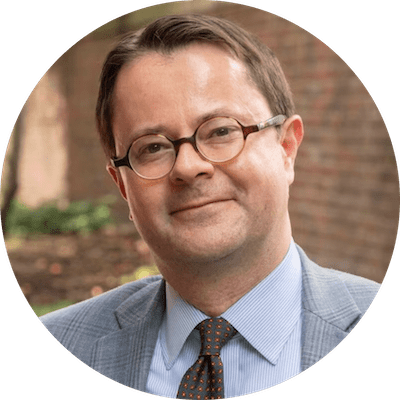

The following are Tyler VanderWeele's remarks at the Human Flourishing Program’s Ten-Year Anniversary Gala October 1, 2026 in Cambridge, Massachusetts.
Flourish: to grow or develop in a healthy or vigorous way. When the Human Flourishing Program began 10 years ago, I could not have imagined that it would grow into the vibrant community it is today, including all of you – our partners, collaborators, supporters, and friends.
It has been a remarkable journey. From two researchers in an office of the Institute for Quantitative Social Science, that generously hosts us, to a team now of twenty-five, with hundreds of collaborators, and networks extending into the thousands and beyond. From an initial paper, “On the Promotion of Human Flourishing” to over 150 publications in peer-reviewed journals in 2025 alone. From occasional conversations with those outside the Program to major impact initiatives spanning education, business, academic life, religious organizations, policy, AI, clinics, communities and more. The Human Flourishing Program has been flourishing – its growth has been vigorous.
Tonight I would like to celebrate with you these past ten years, and provide a vision for the ten years ahead, and invite you all to partner in bringing that vision about.
--
From an academic perspective, our greatest achievement has undoubtedly been the Global Flourishing Study, now completing its fourth year of data collection with over 200,000 individuals in 22 countries spanning all 6 populated continents, representing two-thirds of the world’s population. This has been an incredible collaboration with Baylor’s Institute for Studies of Religion, Gallup, and the Center for Open Science. We’ve learned how different countries are flourishing in different ways, how rich developed countries have higher life evaluation and financial security, but lower meaning and purpose, poorer relationship quality, and weaker pro-social character than poorer countries.
What have we lost in our fixated pursuit of wealth? We’ve learned about the declining well-being of youth, across many dimensions of flourishing. We’ve learned about the importance of religious communities in shaping flourishing across countries and contexts. We’ve learned about the complex relations of suffering with subsequent growth and flourishing.
The work has been covered in over 1500 news articles, over 100 academic publications, a special collection hosted by Nature, and has led to countless discussions with policy-makers, non-profits, businesses, academics, and community organizations all interested in flourishing. For me personally it has also resulted in the most substantial academic friendship I have had, with my co-Principal Investigator of the study. That relationship has helped me to flourish.
But our academic contributions have extended well beyond the Global Flourishing Study: we have built and continue to develop an epidemiology of love – of seeking the good of others, of love of neighbor, and even love of enemy, to promote love in society, to bridge divides, to enable flourishing. We’ve carried out a massive randomized trial of a forgiveness intervention, distilling 30 years of work in clinical psychology on forgiveness into a self-directed workbook, with effects not only on forgiveness, but on reducing depression and anxiety, increasing hope, increasing flourishing. We’ve carried out numerous rigorous studies, using some of the best longitudinal data and causal inference methods, on workplaces, education, family, religious community, meaning, health, social relationships, character, spirituality, volunteering and much more…
We have, as a Program, regularly attempted to measure the unmeasurable, and have developed measures not only of love, but also of meaning in life, hope, suffering, transformation in suffering, community well-being, spiritual well-being, academic well-being, moral injury, social connectedness, and of course… flourishing. Our flourishing measure has been used by millions of people and hundreds of organizations around the globe to better understand, and promote, flourishing.
--
And our work is indeed focused not just on academic pursuit, but on the promotion of flourishing itself. We’ve worked with the OECD to develop their framework for education for flourishing. We’ve worked with state governments to re-orient the evaluation of social programs around flourishing. We’ve worked with the UN and World Vision to bring flourishing to children. We’ve worked with Anthropic to help orient AI towards flourishing.
We’ve begun an Academic Flourishing Initiative and a Flourishing Schools Project to help enable schools and universities to flourish. We’ve established a Flourishing and the Church Initiative to help religious communities to flourish. We’ve launched a Global Forgiveness Movement to bring a greater forgiveness to our broken world.
And our work to promote flourishing has included Harvard as well. For those of you who have been here these past years, you know we need it! We have hosted numerous cohorts of students in our undergraduate Flourishing Fellows Program, participating in reading groups, and visiting Oxford over the summer, to reflect on flourishing in their own lives. We’ve offered numerous for-credit courses within the formal Harvard curriculum.
And we founded, now three years ago, the Council on Academic Freedom at Harvard. That Council now has over 200 faculty members, has helped bring about substantial institutional reform, has been replicated at numerous other universities, and about a year ago, was spun off as an independent entity. It has had an effect. FIRE - the Foundation for Individual Rights and Expression – has altered its free speech ranking of Harvard from dead last two years ago, up to 71st of 261 just last month. Harvard often likes to come out on top, and we have already done so with regard to the most restrictive speech culture. But within a few more years, I think it might be possible that we achieve the top on the other end – the university most devoted to open inquiry. The Council has helped Harvard flourish.
--
Behind each of our statistics, there is a person. Behind every effort to promote flourishing, there are stories…
After attending our Oxford Vivarium, one of our undergraduate flourishing fellows said, “It's a priceless opportunity for us to reflect on what was important to us, what is important to us and what will be important to us. The Vivarium is a time and space to reflect.” Another commented, it “was a life-defining moment for me…[it] offered a[n]… approach towards uncovering… truth.”
For one of the Program’s for-credit courses, a student commented: “This class had the most engaged and lively classroom environment I've ever been in in my 4 years at Harvard… The questions about the roots of conflict, how to define justice, how to build regenerative and restorative systems, are some of the most interesting and I think some of the most important questions we face.”
A man participating in one of our forgiveness groups recounted: “The workbook changed my life. The weight of past hurt and unforgiveness fell from my shoulders…. My wife, my friends, and… people… noticed an immediate, tangible difference … the workbook made the blessing of forgiveness… an ongoing part of my life.”
One woman, simply taking our flourishing survey, commented, “Missing a greater purpose… need to reach out to help more and give back.” She committed to a volunteering activity. Sometimes, the very act of measuring flourishing can serve as an intervention.
We’ve worked with numerous businesses, dozens of universities, networks of schools, networks of churches, to re-orient pursuits in each of these sectors towards flourishing. Each of these efforts is attempting to help people flourish, to empower stories of transformation, of life, of flourishing. It has been challenging, but rewarding, work. And it has been eye-opening…
--
And that then brings me to the vision I would like to put forward, a vision I would like you all to partner in, a vision that is not easy to accomplish, but which, by working together, I believe is possible.
As I’ve reflected on the work of promoting flourishing, I have come to realize that efforts to promote flourishing in each of these sectors are not sufficient. We need something more. We need a re-orientation to flourishing. We need to make flourishing not a guiding principle, but the guiding principle, for all of our efforts. We need to make flourishing the north star of every sector of society, and every academic discipline. If flourishing concerns all aspects of life being good, then flourishing is what we are all seeking, and what we all can seek together. Flourishing holistically includes all of life - relevant for all sectors of society.
Flourishing expands our vision, helping us realize, as in policy, how much more we can achieve beyond economic success. Flourishing provides a correction when our outcomes are too narrow, as when medicine does not consider how side effects of treatments will alter a patient’s life. Flourishing allows us to truly evaluate, as we should do with each and every business, the actual contribution to human life. Flourishing helps us relate all activities, as with education, towards more ultimate ends – the flourishing of persons. Flourishing is relevant in education, in medicine, in science and engineering, in business, in the arts, in religion, in public health, and public policy, and even, as we’ve recently written on, in sports!
Flourishing is relevant not only for every sector of society, but also… for every academic discipline. Flourishing might provide a uniting principle, building bridges across disciplines. The lens of flourishing helps us see the contribution of each discipline, and can help re-orient our disciplines towards ultimate ends. The pursuit of flourishing might help restore trust in the academy. And this lens of flourishing can help bring about the flourishing of the academy itself – its students, its staff, its faculty, and its flourishing as a community – academic flourishing. We should seek to advance flourishing always, in every sector, in every discipline. But to do so adequately, we need to make flourishing the north star.
The idea of the north star includes… that which is immovable… that which is easy to identify… that which points the way… that around which all else revolves. That north star should be flourishing. I can envision a future in which we accomplish this together.
While the notion of flourishing has ancient classical roots, in more contemporary times interest in flourishing has increased massively over these past years. The term “human flourishing” now has four times the Google search interest it did a decade ago. Many have come to see the value of orienting all work towards flourishing, from education to business to religious life. We’ve come a long way, but we have a long way to go.
Most governments do not measure flourishing. Most will subordinate human well-being to economic considerations, often, as we’ve seen, to the detriment of meaning, character and relationships. Most businesses make profit maximization, not flourishing maximization, their stated goal. Most universities focus their measurement efforts more on graduate income than on student formation. These other things are important. But they are important as inputs to flourishing.
Undoubtedly, we have numerous challenges in trying to create a more flourishing world, challenges ranging from war, to political polarization, to pandemics, to environmental concerns, to struggling youth, to the consequences of AI… These challenges are real, and are not straightforward, but if we are going to navigate them well, we need to have the right objectives. We need flourishing as our ultimate outcome, as our north star.
Marty Seligman – grandfather of the positive psychology movement – spoke of aiming to have 51% of the world’s population flourishing by year 2051. While flourishing is multi-dimensional –not binary– we’ve now come to better understand thresholds when people are more likely to consider themselves flourishing.
And I can envision a future in which the Program, through the Gallup World Poll, provides the assessments on how we are doing on these goals, and our Global Flourishing Study provides the knowledge on how to actually advance flourishing across cultures and contexts. A future in which we have a well-developed science of love, hope, meaning, social connectedness, suffering, character, and indeed all aspects of flourishing. A future in which our impact initiatives–from forgiveness, to schools, to evidence-based parenting–achieve a truly global reach. A future in which our work continues to expand into the arts, into AI, into settings ranging from the beginning of life to its conclusion, and to disadvantaged populations, the poor, the homeless, those struggling with the consequences of war, all who are suffering, and ultimately all people. A future in which our policy efforts penetrate governments around the globe, in which all nations take flourishing seriously, and in which flourishing is set as the principal goal.
For this vision to succeed, the reach of this vision needs to extend far beyond the Program itself. We need to encourage and equip others to carry out this work. We need to continue to measure flourishing everywhere. We need to continue to promote flourishing, in every sector of society and every academic discipline. We need to re-orient towards flourishing. We need to make flourishing the north star. That is the vision I would like to see realized in the next ten years. That is the vision I would like to invite you to join me in.
--
I would like to conclude these remarks on a more personal note. My own background and interests, from childhood pursuits, to university study in mathematics, philosophy, theology, finance, statistics, and public health in many ways finally found their intersection, and fulfilment, in the creation of the Human Flourishing Program. Ten years ago, I found an academic calling that I felt worth devoting the rest of my life to–a calling that has been reinforced continually in day-to-day work.
This past decade has been both the most rewarding, and the most difficult, decade of my life. Running an academic program, at this level, is demanding, demanding for me, and demanding for my family, for whose support, and especially for the support of my wife Lisa, I am forever so grateful.
For those of you who know me well, you know that I would prefer to be reading, writing, and thinking away, rather than managing administrative complexities, raising funds, or building infrastructure. Despite how it may appear, Harvard does not financially support us. We are responsible for supporting ourselves. And the funding has been a continual challenge. I often pray for a gift that would free me for the pursuits about which I care most. There is so much that remains for the science of flourishing to advance; so many people still to learn from in deepened research; so many findings yet to be uncovered; so much impact yet to take place; so many people still to help.
I cannot do this without you. We cannot do this without you. And so I invite you all, and all those that you know, to join us in this journey of making flourishing the north star for all…
--
I am accompanied by so many wonderful people on the Human Flourishing Program staff, and on our leadership team, along with those at the Institute for Quantitative Social Science, the Harvard School of Public Health, and the rest of the university. By partners in our work on forgiveness, academic flourishing, character, health, spirituality and education; by funders of so much of our work - the Templeton philanthropies, and many others, for the Global Flourishing Study; the Kern Family Foundation for our work on academic flourishing; supporters of our work on love; our work on education for flourishing; and those who have faithfully and generously given and enabled us to continue, day after day, year after year.
With your help, and your partnership in this journey, I believe the best truly is yet to come. We can work together to create a more flourishing world. We can work… to flourish… together. Thank you.


